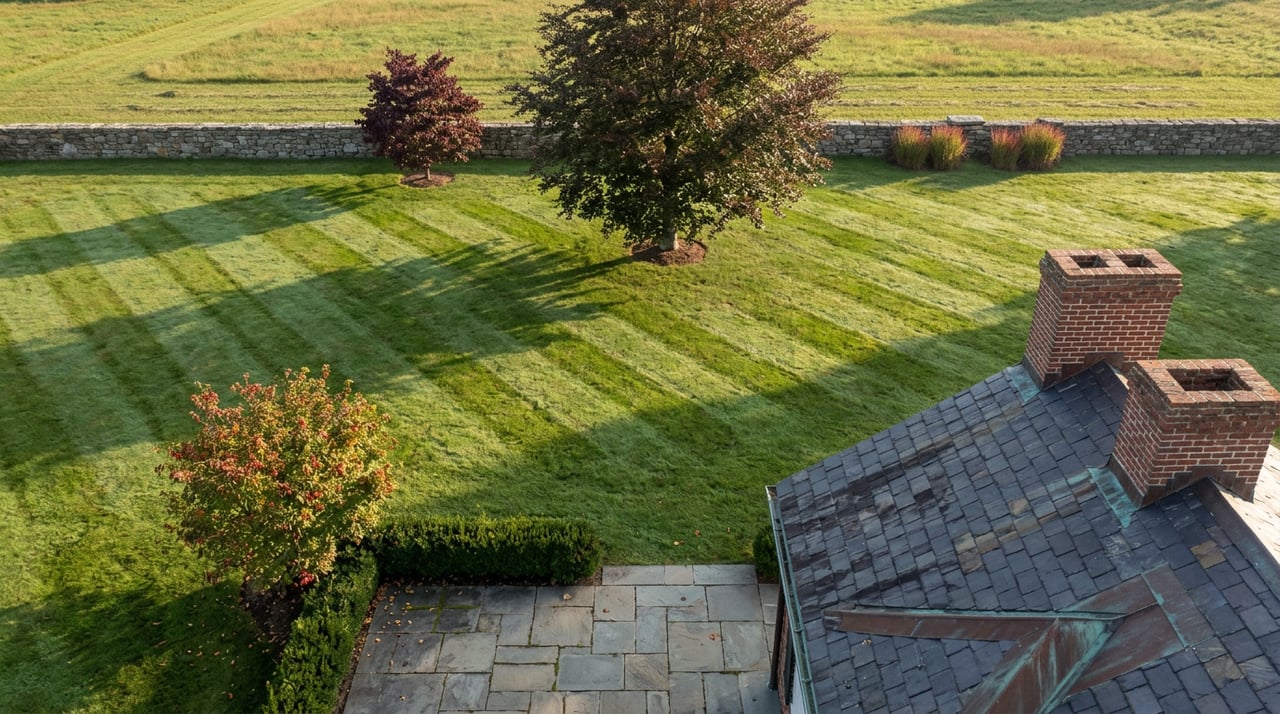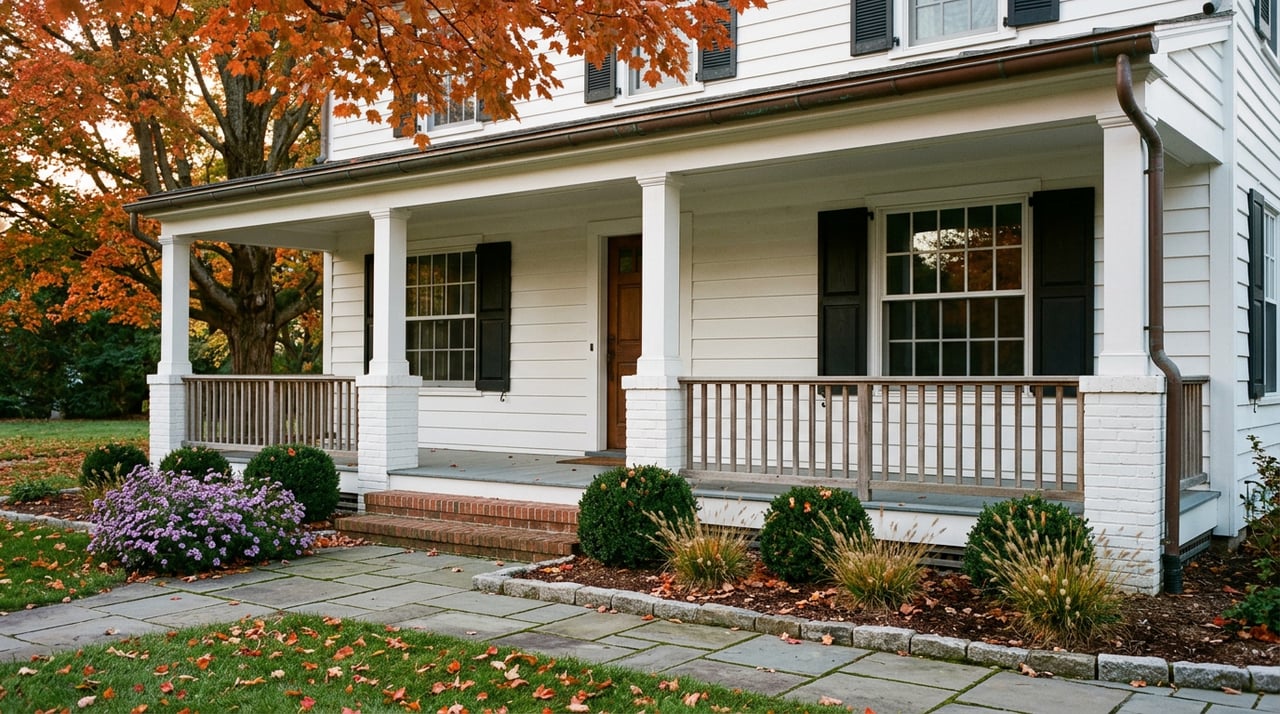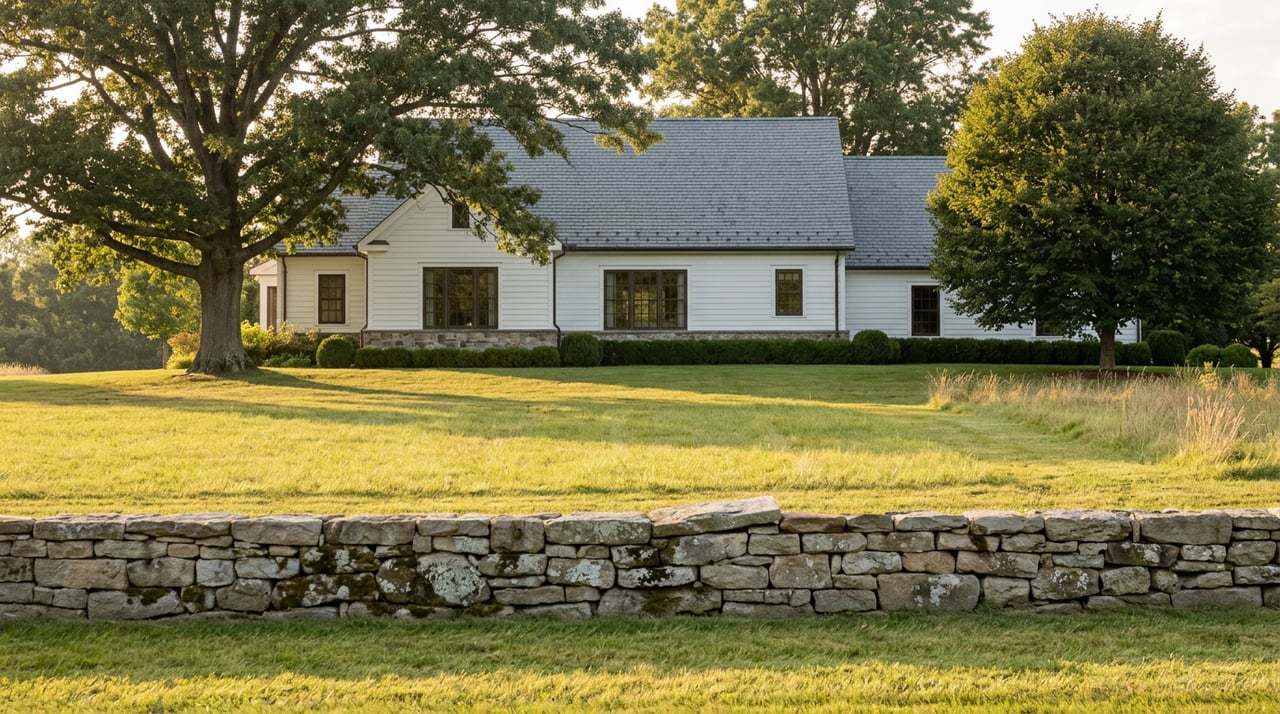
Two ten-acre properties sit less than a mile apart in Bedminster. Both have long gravel drives, mature tree lines, and houses that would appraise within a few hundred thousand dollars of each other. One owner's property tax bill runs into the tens of thousands. The other's runs a fraction of that, sometimes less than what a townhome owner pays two towns over.
The difference has nothing to do with the house. It has to do with a form filed every August, a handful of goats or a few cut acres of hay, and a piece of 1964 tax law that most buyers never think to ask about until they're the ones holding the property.
The Acreage That Comes With Fine Print
New Jersey's Farmland Assessment Act lets land actively used for agriculture or horticulture get taxed on its farming value instead of its market value. To qualify, an owner needs at least five contiguous acres in agricultural or horticultural use, and gross sales from that use have to clear a fairly modest bar, at least $1,000 a year for the first five acres, plus $5 for every acre after that. The house itself, along with its yard, driveway, and pool, is carved out of the calculation and taxed normally. Only the surrounding acreage gets the break.
Bedminster's zoning, built around large minimum lot sizes, is exactly the kind of geography where this math works out in an owner's favor. It's part of why the township shows up repeatedly in reporting on the program. Trump National Golf Club's Bedminster property has maintained farmland assessment on portions of its acreage through hay cutting and goat grazing, a detail first reported by the Wall Street Journal and covered locally by Patch. Reporting on the broader program has also named other large Bedminster landowners, including Woody Johnson and financier Michael Price, as beneficiaries of the same assessment.
None of this is a scandal specific to Bedminster. It's the predictable outcome of a statewide law meeting a township full of large lots. But it means a buyer evaluating a big Bedminster parcel is often looking at a tax number that reflects a farming designation, not the property's actual market value, and that designation comes with conditions.
What Happens When The Hay Stops
The condition is called a rollback tax, and it's where the arithmetic turns against a buyer who isn't paying attention.
Under the statute, farmland assessment doesn't disappear just because the property changes hands. According to the New Jersey Division of Taxation, rollback taxes are not generated when a new owner continues to actively use the property as farmland. The trigger isn't a sale. It's a change in use, whether that's clearing woodland for a pool complex, stopping the hay cutting, subdividing, or building additional structures on what had been open acreage.
Once that change happens, the township can bill the difference between what was paid under farmland assessment and what would have been paid at full market value, and it can go back further than most buyers expect. Under current law, that difference is calculated for the year the change takes place plus the two tax years immediately before it, three tax years of retroactive liability in total.
The scale of that bill depends entirely on how wide the gap was to begin with. A rough illustration makes the exposure clear:
| Annual property tax | |
|---|---|
| Farmland-assessed rate | $1,500 |
| Full market-value rate | $25,000 |
| Annual difference | $23,500 |
| Rollback liability (3 tax years) | $70,500 |
That's not a fee. It's a lien that attaches to the land itself, and it lands on whoever owns the property when the use changes, whether that's the buyer who cleared the pasture or the family who bought it not realizing the assessment was contingent in the first place.
The Rules Are Getting Stricter, Not Looser
This isn't a static corner of the tax code. On January 14, 2026, Governor Murphy signed the Farmland and Woodland Tax Assessment Integrity and Investment Act into law. The bill adds new members to the State Farmland Evaluation Committee, including a public member and additional forestry expertise, raises penalties for applicants who misrepresent their farming activity, and requires an online application portal that the Division of Taxation expects to launch for the 2027 tax year.
A separate bill, A4378, introduced in the Assembly in February 2026, would go further still. It proposes extending the rollback lookback from two preceding tax years to three, doubling the frequency of on-site inspections for farmland parcels under ten acres, and creating a state hotline for reporting suspected misrepresentation. As of this writing, that bill remains pending in the Legislature and has not been enacted.
Neither piece of legislation changes what a buyer owes today. Together they signal a direction: more inspections, more paperwork, and a longer financial tail if the state's proposed extension eventually becomes law. A buyer weighing a change of use on a farmland-assessed Bedminster property is planning against a rulebook that is actively being rewritten in the direction of stricter enforcement.
What This Means If You're Buying
Before writing an offer on a large Bedminster lot, a few questions are worth answering before they become surprises:
- Ask directly whether farmland assessment is in place on the parcel, and for how long. Listing sheets rarely spell this out.
- Contact Bedminster Township's Tax Assessor's office to confirm the assessment status and understand what continued qualification requires. The office is staffed Wednesday afternoons or by appointment, and every annual application carries a $25 township inspection fee under the municipal code.
- Decide early whether your plans for the property, a pool, a barn conversion, additional acreage cleared for lawn, would count as a change of use. If they might, budget for the rollback liability the same way you'd budget for a septic upgrade or a new roof.
- Remember the annual filing deadline. Farmland assessment applications are due to the local tax assessor by August 1 of the year before the tax year in question. Missing that window can lapse the assessment even without a formal change of use.
What This Means If You're Selling
If you're the one holding a farmland-assessed Bedminster property, the reassuring part of the statute is this: selling the property does not, by itself, trigger rollback taxes. The liability attaches to a change in the land's use, not to a change in ownership. A sale to a buyer who intends to keep the acreage in agricultural or horticultural use, even a modest hobby operation, can preserve the assessment straight through closing.
Where sellers run into friction is disclosure. A buyer who discovers the farmland assessment after an offer is already in, rather than before, tends to feel misled even when nothing improper happened. Surfacing the assessment status early, along with what it would take to maintain it, keeps the negotiation grounded in facts instead of a post-inspection scramble.
A Few Straight Answers
Does selling a farmland-assessed property automatically trigger rollback taxes? No. The statute ties the rollback to a change in use, not a change in ownership. A new owner who keeps the land in agricultural or horticultural use inherits the assessment along with the property.
Is farmland assessment permanent once it's granted? No. It has to be reapplied for every year, with Form FA-1 due to the local tax assessor by August 1 of the pretax year. A lapsed application, not just an intentional change of use, can end the assessment.
Does a small addition or a new pool automatically count as a change of use? It depends on how much contiguous acreage remains actively farmed after the project and whether the addition sits inside the existing curtilage. This is a question for the township assessor before the shovels move, not after.
A Bedminster tax bill that looks unusually low is worth a closer look, not less scrutiny. Understanding what's holding that number down, and what it would take to change it, is part of pricing the property honestly rather than pricing the listing sheet.
If you're evaluating a large-lot property in Bedminster, or thinking about what a change in use might cost you down the road, Megan Bonanno can help you get a clear read on what you're actually buying. Request Your Free Home Valuation to start the conversation.