If you've been comparing Somerset Hills towns by pulling up the median home price for each one, Peapack-Gladstone will have already broken your spreadsheet. In January 2026, the borough's median sale price was reported at $2.7 million, up 203.8 percent from a year earlier. By June, the same kind of tracking showed a median of $709,614, down 58.6 percent year over year. In July, one site listed the median home price at $4.1 million against an average sale price of $2.695 million, on an active inventory of exactly three single-family listings. A different site, pulling data in May, put the median list price at $2.25 million with homes sitting for a median of 129 days.
None of these numbers are wrong. They're just not measuring the same thing, and none of them are stable enough to build a buying decision on. That's the actual story here: Peapack-Gladstone doesn't have a normal housing market with a normal median, it has a handful of transactions a month that get called a market, and the arithmetic that works fine in a town with hundreds of annual sales falls apart when you're averaging six or eight of them.
A Market Too Thin to Average
A median is the middle value in a list. When the list has 40 sales in a month, one unusually expensive estate barely moves it. When the list has three or four, one estate closing can double the number, and its absence the following month can cut it in half. That's not a market correction. That's sample size.
This is why the reported inventory count doesn't even agree across sources. One tracker showed 35 homes for sale in the borough in a recent pull. Another, counting single-family homes only, showed three. Both can be true at once if one is counting condos, land, and a wider zip radius and the other is counting only detached houses inside borough lines. The lesson isn't which number to trust. It's that any single snapshot of this market is a snapshot, not a trend line, and you should be suspicious of anyone who quotes you one figure without a time window attached to it.
Two Villages, Two Housing Stocks
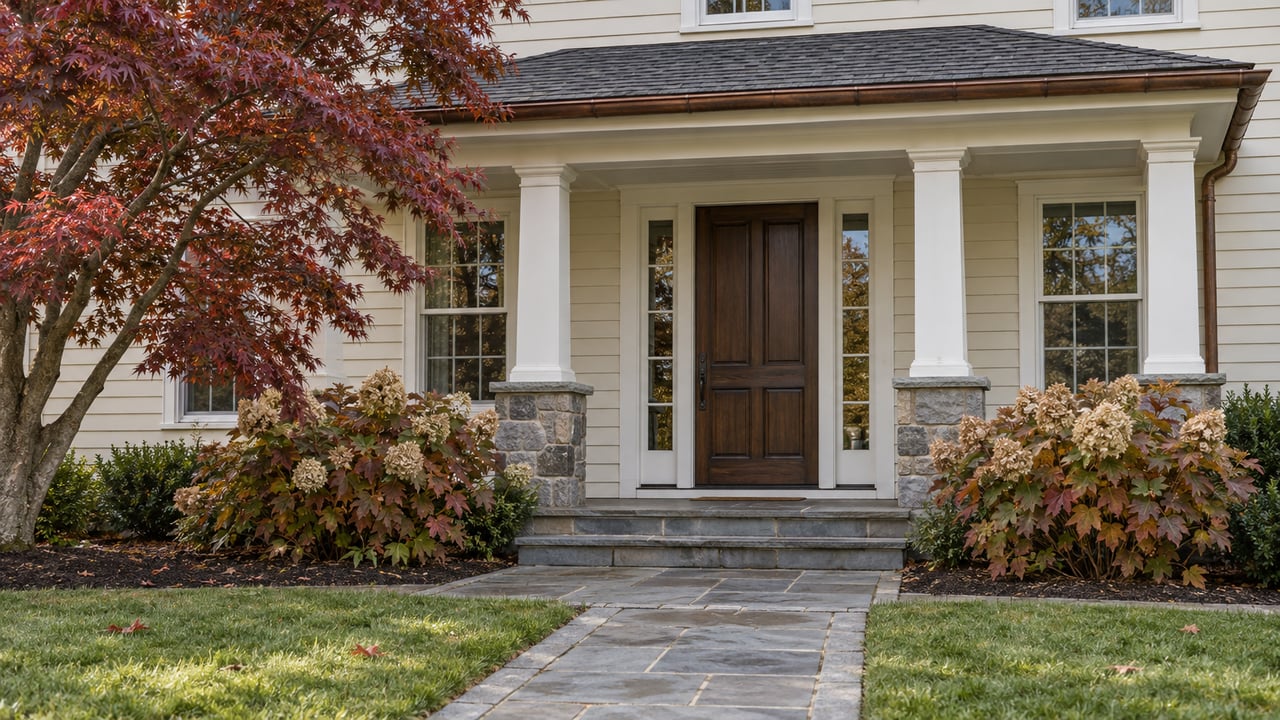
Part of why the swings are so violent is baked into the borough's shape. Peapack and Gladstone were originally two separate villages before merging, and the housing stock still reflects it. In the same borough you'll find a small two-bedroom cottage near the village center listed around $500,000 and, a few roads over, a six-bedroom, twelve-bathroom estate on 13 acres priced near $5.8 million. Over a twelve-month span ending in mid-2026, the reported median sale price across all of it landed at $2,695,000, up roughly 140 percent from the prior twelve months.
A number like that isn't describing appreciation. It's describing which side of the village-versus-estate line happened to trade that year. If the sales skew toward Main Street cottages, the median drops. If they skew toward Hamilton Farm-adjacent estates, the median spikes. Both things happened within the same twelve-month window described above, which is exactly why the year-over-year swings look absurd on paper.
| Reported figure | What it measured | Time window |
|---|---|---|
| $2.7 million median, up 203.8% YoY | All home types, single month | January 2026 |
| $709,614 median, down 58.6% YoY | All home types, single month | June 2026 |
| $4.1 million median vs. $2.695 million average | Active single-family listings only (3 on market) | July 2026 |
| $2.25 million median list price, 129 days on market | All home types | May 2026 |
Why the Lots Stay Big
The volatility isn't a temporary quirk of a slow year. It's structural, and the borough's own zoning code is the reason. Under the Rural Estate zone, maximum tract density is capped at one unit per ten acres. The next zone down, RR-5, caps at one unit per five acres. Those caps mean the large-lot side of the market can't quietly densify its way into more transactions over time. The estate inventory will always be small because the zoning was written to keep it small.
That constraint just got reinforced. In January 2026, the New Jersey Highlands Council approved Peapack-Gladstone's petition for conformance with the Highlands Regional Master Plan, a process the borough had been working through since a public comment period closed in late 2025. Conformance locks the borough's land use rules into alignment with the regional plan, which means the large-lot zoning that's already suppressing transaction volume isn't going anywhere. If you're waiting for more inventory to loosen up the estate side of this market, the regulatory signal points the other way.
The Land That Will Never Be Listed
Part of what makes the estate inventory so thin is that a meaningful share of the borough's land was never going to be for sale in the first place. Natirar, the historic estate whose grounds now form a county park, accounts for 247 acres inside the borough, making it the largest single block of preserved land in Peapack-Gladstone. That acreage extends into neighboring Far Hills and Bedminster and isn't coming back onto the residential market.
Add in the more than 100 acres held by the borough's private hunt clubs, evolved over time into two separate organizations that still use the land for fox hunting and winter recreation, plus the acreage tied to Hamilton Farm, which trains athletes and horses for the United States Equestrian Team, and you start to see how much of Peapack-Gladstone's land is functionally permanent. None of it feeds the transaction count that produces a median. It just sits there, quietly shrinking the denominator every time someone tries to calculate an average.
Even the Village Core Can't Add Supply Quickly
If the estate side can't densify because of zoning, the village side has its own bottleneck: flood regulation. The commercial stretch along Lackawanna Avenue has been the subject of a mixed-use redevelopment plan for years, one that includes income-restricted housing units tied to a borough affordable housing settlement. According to borough planning coverage from 2024, state regulators had raised the design flood elevation by two feet and enlarged the Peapack Brook floodway and exterior floodplain, which pulled a building at 10 Lackawanna Avenue, the former Bevel Saddlery site, directly into the newly expanded flood zone. That single regulatory change forced the developer to reconsider the project's density, its parking layout, and which structures could simply be renovated versus which now required full teardown and DEP sign-off.
The point isn't the specific address. It's that even the part of Peapack-Gladstone zoned for higher density, the part that could in theory add the small-lot inventory the estate zone can't, runs into its own regulatory ceiling. Between the ten-acre minimums on one side of town and the floodplain expansion on the other, there's no obvious path to a larger, steadier transaction count anytime soon.
What to Actually Compare
None of this means Peapack-Gladstone is unknowable. It means the median is the wrong tool. A few things hold up better:
- Price per square foot, split by housing type. A village cottage and a Hamilton Farm-area estate shouldn't be averaged together, but their per-square-foot figures within their own category are far more stable than a blended median.
- The spread in days on market, not just the median. A property that sells in six days and one that sits for 129 days can both be accurate for the same borough in the same season. The spread tells you more about buyer appetite than either number alone.
- Whether a specific parcel touches the Raritan River headwaters or relies on well and septic infrastructure. Both are common in Peapack-Gladstone and both affect what a lender, an inspector, and eventually an appraiser will say about a given property, regardless of what the borough-wide median claims.
- Which zone a property sits in. A house in the RE zone is playing a different game than one in the village core, and pricing it against the wrong comp set is how buyers overpay or underbid.
A Few Straight Answers
Does a 200 percent price jump mean the market is booming? Not on its own. In a market with three to eight closings a month, one estate sale can produce a headline number like that without reflecting any actual shift in buyer demand or seller expectations.
Why don't the inventory counts across sites agree? Different trackers define the search area and property types differently. A borough-wide count including condos and land will always look bigger than a single-family-only count. Treat any inventory figure as a snapshot tied to its own definition, not a universal fact.
Is this a buyer's market or a seller's market right now? The honest answer is that the label doesn't mean much here. With so few transactions, conditions can look completely different from one closing to the next depending on whether that closing was a village cottage or a rural estate. The more useful question is what a specific property, in its specific zone, has actually been trading for.
If you're trying to make sense of what a particular Peapack-Gladstone property is really worth, the median won't get you there. A comparison built from the right zone, the right housing type, and the right time window will. Megan Bonanno works this market at the parcel level, not the headline level, and can walk you through what your specific address is actually worth against real, matched comps. Request your free home valuation to start with numbers you can trust.
This article is general information, not legal, tax or financial advice. Consult a qualified professional about your situation.