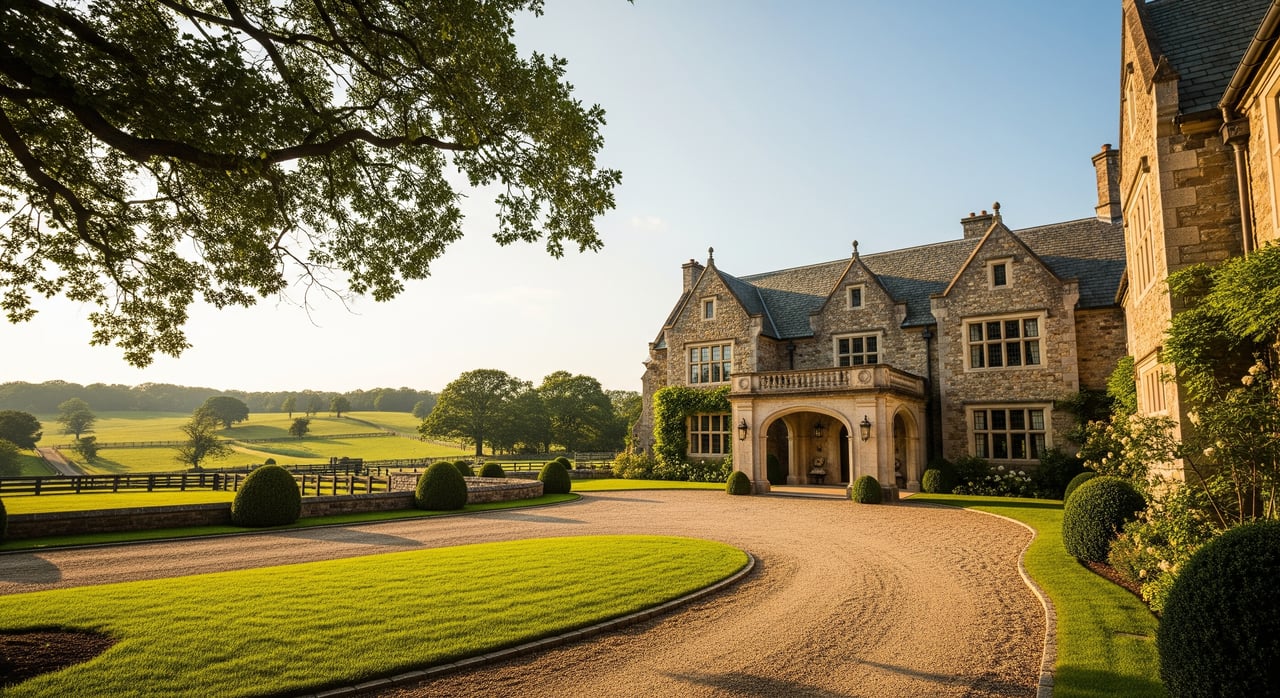
Are you eyeing a Far Hills estate and wondering if your mortgage will count as a jumbo loan? You are not alone. Many buyers moving into Somerset County, especially relocating executives and move‑up buyers, cross the conforming loan threshold without realizing it. Molly Briggs, Loan Originator from Guaranteed Rate (NMLS #346710), helps us understand how to tell if your loan is jumbo, what to expect from a lender, how portfolio lending works, and the local steps that help you win in a competitive luxury market. Let’s dive in.
What makes a loan “jumbo” in Far Hills
A mortgage becomes a jumbo loan when the amount you borrow is higher than the conforming loan limit set each year by the Federal Housing Finance Agency. Loans at or below this limit are eligible to be purchased by Fannie Mae and Freddie Mac. Anything above that limit is considered jumbo and is financed by other investors or held by lenders.
The key point for you: focus on your loan amount, not the purchase price. If your loan amount exceeds the current Somerset County conforming limit, your loan is jumbo.
Somerset County’s Jumbo Loan Limit
-
Fannie Mae/Freddie Mac’s loan limit increased for Somerset County from $1,209,750 in 2025 to $1,249,125 for 2026
-
Always confirm with your lender to confirm the number they use, as well as if they have any particular restrictions (i.e. lot size, farm use, accessory dwelling units, etc..)
Will your Far Hills purchase require a jumbo?
Far Hills includes many estate properties with larger acreage and unique features. These homes often require financing above the conforming limit. If your down payment does not bring the loan amount at or below the county cap, you will need jumbo financing.
A quick test you can use before you get preapproved:
-
Estimate your loan amount by subtracting your planned down payment from the purchase price.
-
Is that amount higher than $1,249,125?
-
If your loan amount is higher, plan for jumbo underwriting.
What jumbo lenders look for
Jumbo loans serve strong borrowers, but guidelines vary by lender. Expect more documentation and closer review of income, assets, and the property.
Down payment and loan-to-value
-
Typical jumbo loan-to-value ratios range from about 70% to 90%, depending on strength.
-
Many buyers put 10–20% down. Lenders often prefer 20% or more for the best terms.
-
For very large loans or complex income profiles, plan for 25–30% down.
-
Private mortgage insurance is rarely used on jumbos. Lenders generally expect more equity instead of PMI.
Credit score
-
Minimums can start in the mid‑600s to low‑700s at some lenders.
-
For the most competitive pricing and options, a 720+ score is commonly favored.
-
Lower scores can reduce available programs and may increase the required down payment or rate.
Debt-to-income ratio
-
Many lenders prefer DTI at or below 43–45%.
-
Some may allow up to about 50% with strong compensating factors like large reserves, low LTV, or excellent credit.
-
Jumbo underwriting often reviews your entire profile, not just one number.
Cash reserves
-
Plan for 6–12 months of principal, interest, taxes, and insurance on hand after closing.
-
For larger loans, higher LTVs, or nonstandard income, expect 12–24 months or more.
-
For high‑value Far Hills estates, lenders may ask for reserves that reflect property taxes, insurance, and maintenance, as well as covering any payments for other owned properties (vacation homes).
Documentation and income verification
-
Full documentation is the gold standard: recent W‑2s, tax returns, pay stubs, bank and investment statements.
-
Some lenders offer bank-statement or alternative documentation options for self‑employed buyers and executives. These usually come with higher rates, larger down payments, and bigger reserves.
Appraisal and valuation
-
Expect a full interior and exterior appraisal. For unique estates or thin comparable sales, a second appraisal or price opinion may be required.
-
Appraisal turn times can run longer in low‑volume segments. Build extra time into your contract.
Far Hills factors that affect approval
Far Hills estates are distinctive. That uniqueness is part of their appeal and a key reason lenders apply extra care.
-
Valuation: Larger parcels, guesthouses, equestrian facilities, and specialty improvements can make comps harder. Plan for thorough valuation and the possibility of a second appraisal.
-
Carrying costs: Property taxes, homeowner’s insurance, and any HOA or POA dues affect your monthly payment and required reserves. Lenders will review these closely.
-
Property condition: For high‑dollar homes, lenders scrutinize structural and safety items and may require repairs or holdbacks.
-
Accessory Dwelling Units: Are there any other structures on the property?
-
Timing: In the luxury segment, sellers may require proof of funds and a strong preapproval. A fully underwritten preapproval can strengthen your offer.
How to shop smart for a jumbo in Somerset County
-
Request a fully underwritten preapproval or approval in principle. This is stronger than a basic prequalification and can help you compete.
-
Ask targeted questions:
-
What is the maximum LTV for my profile and loan size?
-
How many months of reserves are required at this price point?
-
Do you offer interest‑only or ARM options? What are the tradeoffs?
-
Will you require a second appraisal for a Far Hills estate?
-
What is the typical timeline from application to clear‑to‑close?
-
How do your rate locks work, and do you offer a float‑down?
-
Coordinate with your financial and tax advisors before liquidating assets for a down payment. Consider the impact on your portfolio and taxes.
Your jumbo loan readiness checklist
-
Verify the current Somerset County conforming loan limit so you know if your target price triggers jumbo financing.
-
Secure fully underwritten preapprovals from two lenders, including one local portfolio bank.
-
Gather documents: 2+ years of tax returns, pay stubs, W‑2s or K‑1s as applicable, and recent bank, retirement, and brokerage statements.
-
Budget for reserves: aim for at least 6–12 months of PITI, and more for larger or more complex loans.
-
Discuss appraisal strategy early, including potential timing and the need for a second opinion on unique estates.
-
Clarify each lender’s overlays on credit score, seasoning, and appraisal requirements.
-
Plan your rate‑lock strategy. Jumbo spreads can move, so understand lock terms and any float‑down options.
Timeline and offer strategy
In a competitive luxury market, preparation reduces stress and improves outcomes.
-
Get your documentation into underwriting early so your preapproval is as strong as possible.
-
Keep proof of funds handy and use clear, organized financial statements.
-
Build appraisal time into your offer if the property is unique or if a second valuation may be ordered.
-
Coordinate with your agent and lender on closing timelines so the contract reflects realistic milestones.
Common pitfalls to avoid
-
Assuming PMI will let you put less than 20% down. PMI is rarely used for jumbos, and lenders typically require higher equity.
-
Ignoring taxes, insurance, or HOA dues when setting your budget. These affect DTI and reserve requirements.
-
Expecting all lenders to offer the same terms. Jumbo overlays and portfolio policies vary widely.
-
Waiting to gather documents. Jumbo underwriting is detail‑heavy, and missing paperwork can delay closing.
-
Underestimating appraisal complexity for unique estates. Plan ahead, and discuss strategy with your lender and agent.
The bottom line for Far Hills buyers
Jumbo financing does not have to be complicated. When you know how the conforming limit works, prepare solid documentation, and compare a national jumbo lender with a local portfolio bank, you give yourself more options and a smoother path to closing. With the right plan, you can secure competitive terms and submit an offer that stands out.
Ready to talk strategy for a specific home or price point in Far Hills? Connect with Megan Bonanno, Broker Associate for calm, local guidance and a clear plan from preapproval through closing.
FAQs
What is a jumbo loan in Somerset County?
-
A jumbo loan is any mortgage amount above the FHFA’s conforming loan limit for Somerset County ($1,249,125). Loans at or below the limit are conforming; loans above it are jumbo.
How do I know if my Far Hills purchase needs a jumbo loan?
-
Subtract your down payment from the purchase price. If the resulting loan amount is above the current county limit, you will need jumbo financing.
What down payment do jumbo lenders usually require?
-
Many qualified buyers put 10–20% down, but lenders often prefer 20%+. For very large or complex loans, 25–30% may be required.
What credit score do I need for a jumbo mortgage?
-
Some lenders allow mid‑600s to low‑700s, but the widest options and best pricing typically start at 720+.
How many months of reserves should I plan for on a jumbo?
-
Plan for 6–12 months of PITI at a minimum. For larger loans or nonstandard incomes, 12–24 months or more may be required.
Are jumbo interest rates always higher than conforming?
-
Often they are higher by a spread that changes with the market. Your exact rate depends on credit, LTV, loan size, and product type. Sometimes, however, the rates may be lower.
For more mortgage information contact Mortgage Professional Molly Briggs at Guaranteed Rate (NMLS #346710)
“When I refer clients to a mortgage professional, trust is non-negotiable. Molly Briggs has consistently proven herself to be thoughtful, ethical, and highly skilled—particularly when deals involve larger loan amounts, tight timelines, or complex financial profiles. She is someone I trust to care for my clients the way I do.”